
 [
[



欧洲的科研团队正全力投身于小型化太空推进技术的前沿开发工作。这项创新技术摒弃了传统的推进剂,而是巧妙地基于集成钙钛矿 - 铜铟镓二硒化物(CIGS)叠层太阳能电池的电动系线来运作 。
该技术的诞生有着明确且重要的目标,它致力于实现太空中卫星的灵活操控。无论是调整卫星的运行姿态,还是协助卫星安全脱离既定轨道,它都能发挥作用。值得一提的是,在整个运作过程中,它无需依赖卫星上搭载的重型推进装置,从而有效减轻了卫星的负载,为太空探索任务带来更多的便利与可能。
Perovskite-CIGS tandem solar cells powering electrodynamic tethers used in satellites
European researchers are developing miniaturized space propulsion technology that is propellant-free and based on electrodynamic tethers integrating perovskite-copper indium gallium diselenide (CIGS) tandem solar cells. It is meant to maneuver satellites in space or in de-orbiting without relying on heavy propellants on board.
A European consortium is developing miniaturized in space propulsion devices that operate without propellants. They are based on electrodynamic tether technology integrating perovskite-copper indium gallium diselenide (CIGS) tandem solar cells.
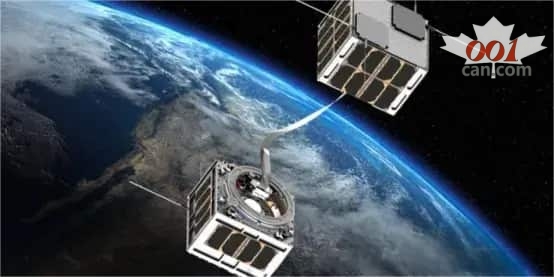
A recently launched project known as E.T.COMPACT, short for Compact and Propellant-less Electrodynamic Tether, aims to develop a “green” propulsion system that could be used to de-orbit or maneuver. spacecraft without relying on heavy propellants on board.
“The main challenge of the project is to reach technology readiness level four (TRL 4) for an ultra-compact propellant-less, in-space green-propulsion mobility module (GMM) fed with solar energy and based on electrodynamic tether technology,” Gonzalo Sánchez-Arriaga project coordinator at University Carlos III of Madrid (UC3M), told pv magazine.
This type of propulsion has the potential to “considerably reduce” satellite costs while significantly increasing the proportion of usable satellite mass, freeing up space for scientific experiments, antennas, or cameras, according to Martin Tajmar, the chair of space systems at Technical University Dresden.
The project includes developing bare-photovoltaic tethers (BPT) that integrate perovskite-CIGS tandem cells with a 2-terminal configuration on one side of the long conductive tether strips.
“The BPT should meet challenging requirements like for instance being able to be stored in a reel of small radius, being compatible with the space environment, and having a power conversion efficiency larger than 12%,” said Sánchez-Arriaga, noting that the team is currently doing a trade-off analysis to define things like solar cell dimensions and substrates.
Describing the project’s BPT and electrodynamic tether technology, Sánchez-Arriaga said, “For the GMM of E.T.COMPACT we are targeting a tether length of a few hundreds of meters. However, an interesting characteristic of tethers is that they are scalable in the sense that their length and width can be designed according to the mass of the satellite, its orbits and propulsion needs. For instance, a 1 km-long tape tether with a width of 2.5 cm and PV cells printed on one side provides an area of 25 m2.”
Considering that the solar constant is around 1.3kW/m2, the BPT concept has “high potential” when combining bare tether and photovoltaic technologies in a single device, according to Sánchez-Arriaga.
The electrodynamic tethers are long, conductive strips that can be attached to satellites. “When moving through the earth's magnetic field, these tethers generate a voltage. This creates a closed circuit between the tether and the surrounding plasma atmosphere or the ionosphere. The force acting on the conductive strip is known as the Lorentz force. This principle is also used in classic electric motors,” stated the researchers.
This force, however, can not be defined as electric propulsion. “In the space domain people understand that electric propulsion means plasma thrusters, which need propellant,” explained Sánchez-Arriaga, noting that chemical propulsion and electric propulsion use hydrazine and xenon or krypton, respectively.
The €4 million ($4.1 million) three-year project is funded by the European Innovation Council Pathfinder program. The consortium includes researchers from perovskite specialist Halocell Europe, based in Italy, CIGS module manufacturer Sunplugged, based in Austria, Persei Space, a Spanish spinoff of UC3M, Deimos Engineering and Systems, a unit of Madrid-based Deimos Space, an aerospace technology company, along with University of Padua, TU Dresden and UC3M.
平台声明:该文观点仅代表作者本人,零碳未来网 系信息发布平台,我们仅提供信息存储空间服务。



发表评论 取消回复